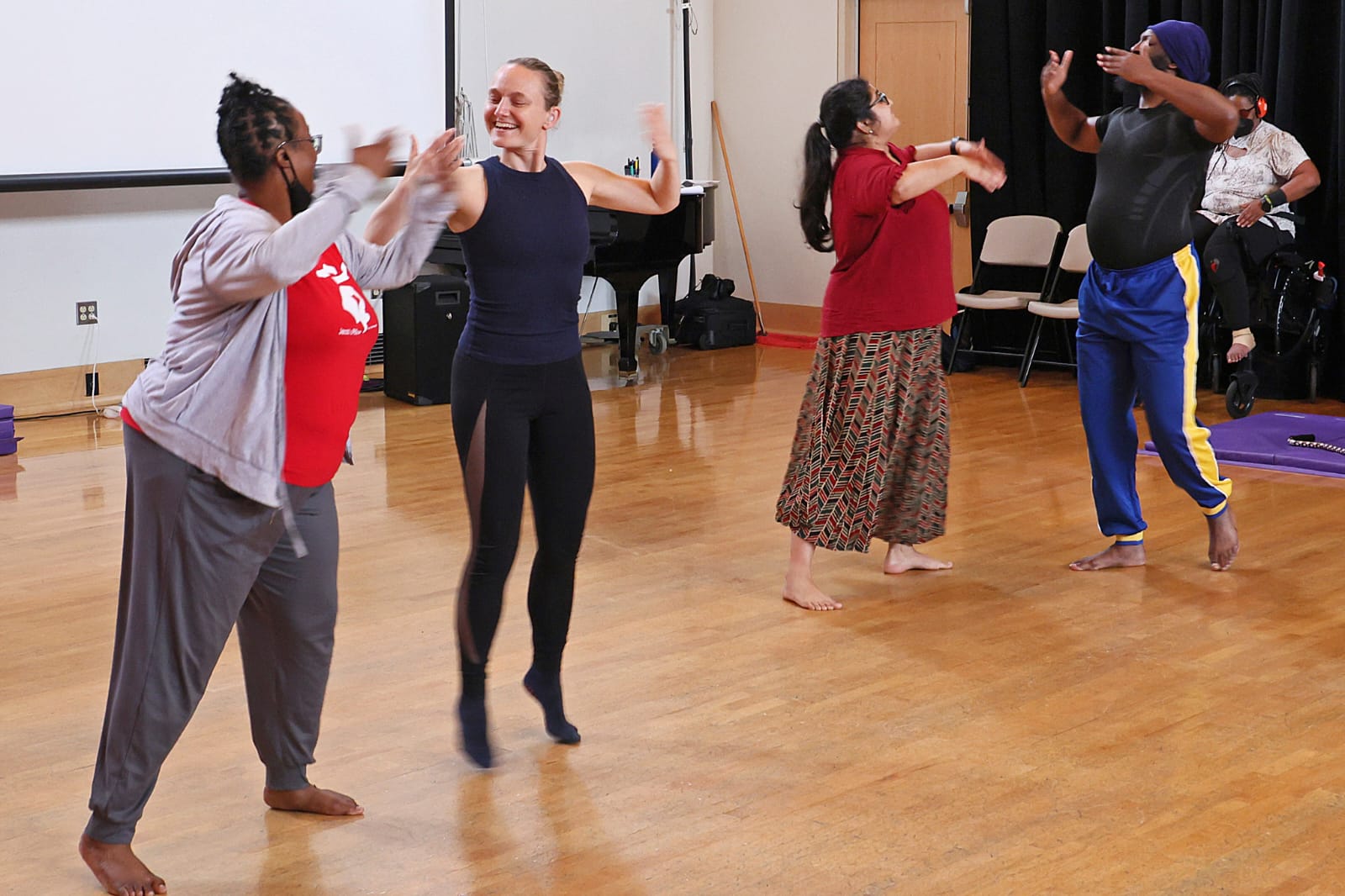
My movement practice sits at the intersection of classical training, improvisation, martial arts, and disability-led pedagogy. I entered the world of dance through Indian classical forms but now work primarily with contemporary improvisational approaches, especially Contact Improvisation. Over time, I’ve come to understand movement not as something performed for an audience, but as a way of sensing, thinking, and being in relation.
How I Move
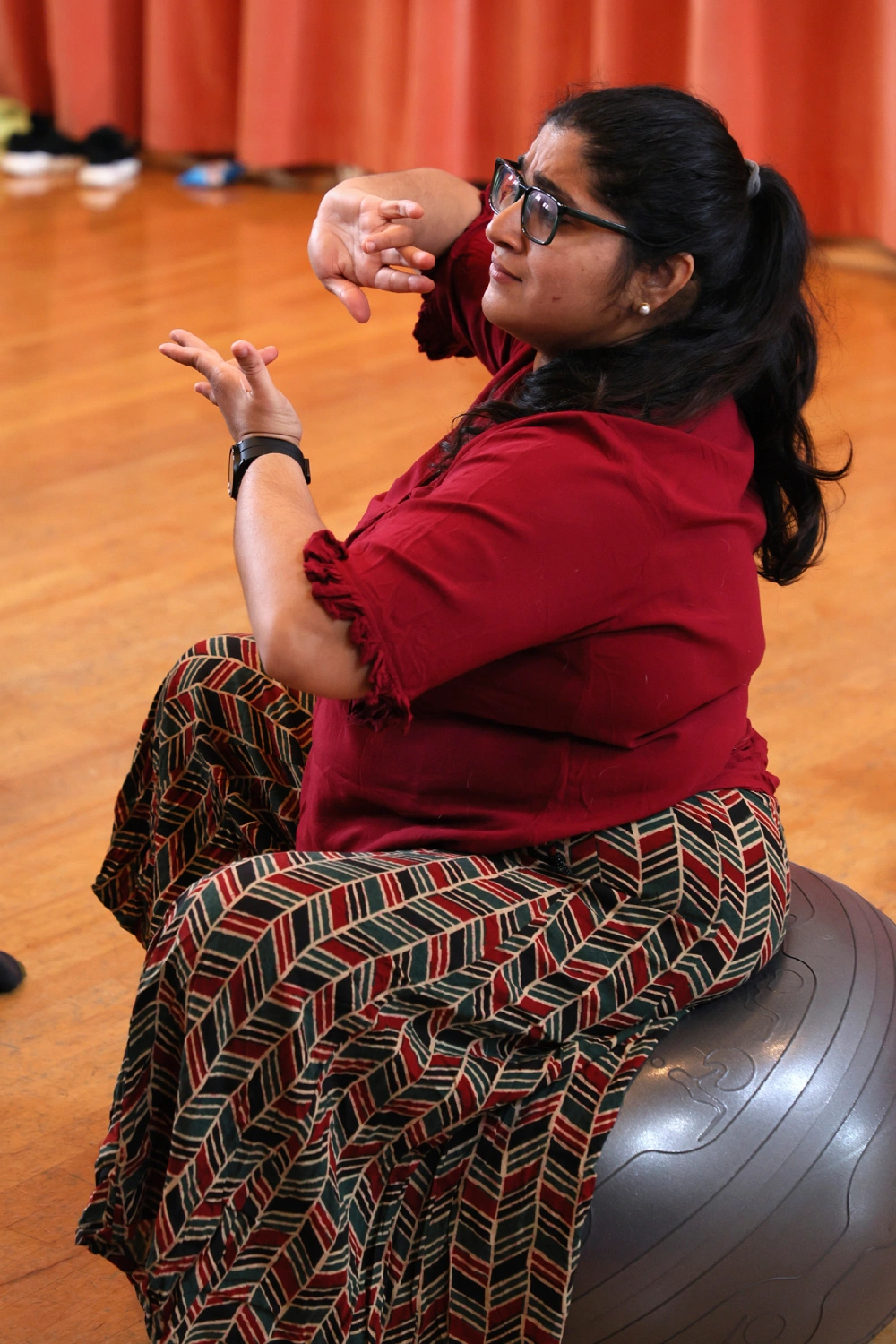
As a low-vision mover, I navigate space through breath, sound, pressure, weight, and tactile memory. Vision becomes one reference point among many. This sensory reorientation shapes how I move and teach — grounding everything in somatic awareness, gravity, and the ethics of touch. Variation and fluctuation are not deviations but methods. My practice is shaped by disability aesthetics: the belief that bodies teach through uncertainty, that difference generates technique, and that access is inseparable from creativity.
Influences and Lineages
The forms I’ve studied continue to echo through my work.
Classical dance offered foundations in rhythm, gesture, and embodied narrative.
A short but formative period of Kalari introduced grounded physicality shaped by breath, stance, and martial precision.
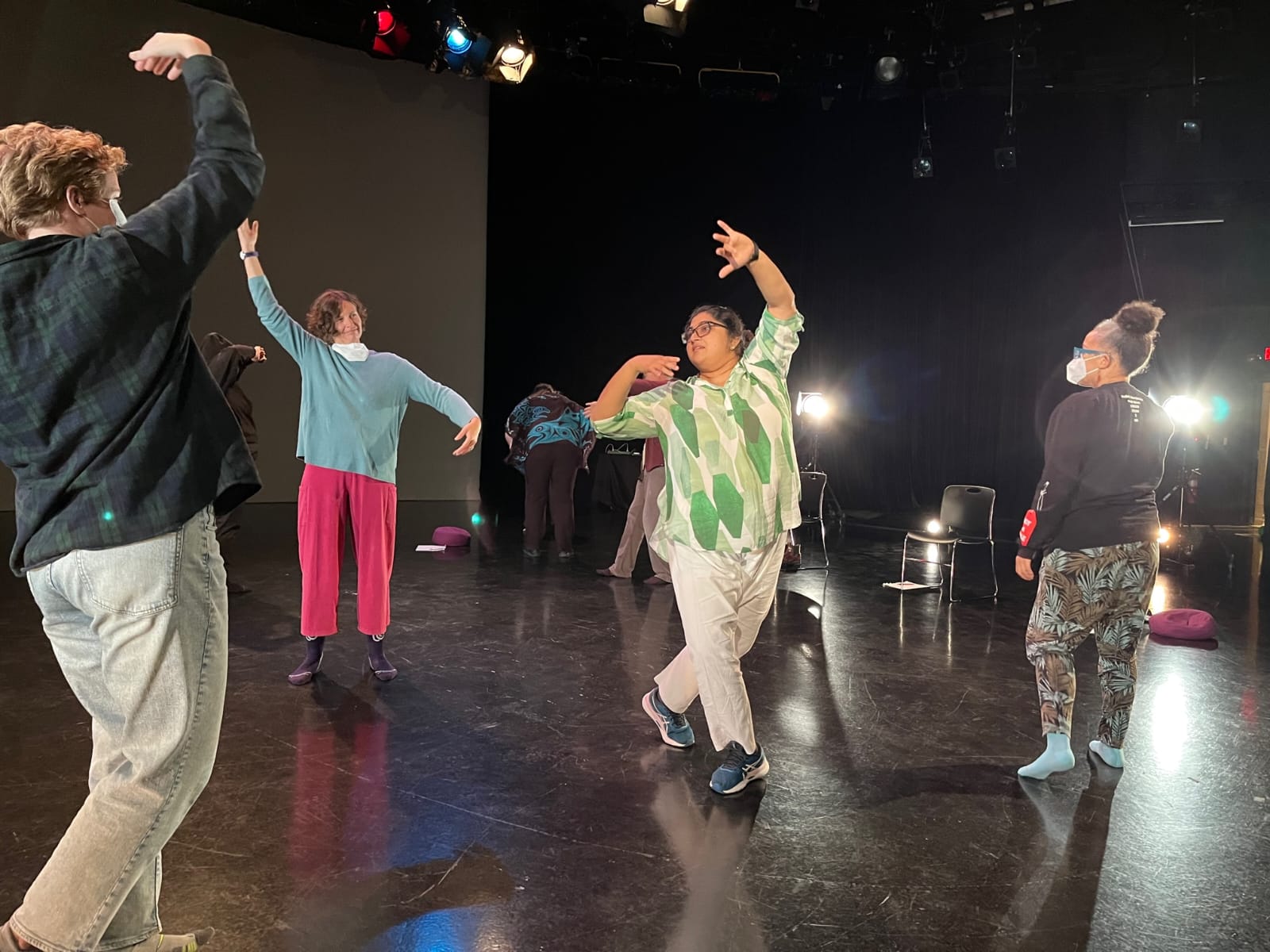
Contact Improvisation opened an improvisational sensibility rooted in attention, weight-sharing, and responsiveness.
These influences don’t sit separately — they converse. Movement becomes a negotiation between discipline and listening, between technique and adaptation, between form and sensation.
Disability-Informed Pedagogies
A significant part of my work involves developing pedagogies that respond to fluctuating bodies rather than demanding consistency. I collaborate with disabled dancers — blind, low-vision, chronically pained, neurodivergent, and mobility-diverse performers — to build practices where:
- technique bends to the body
- movement is transposed rather than standardized
- pace becomes relational
- care operates as a compositional tool
Creative audio description often becomes part of the choreographic process, expanding how movement is perceived and communicated.
Teaching & Workshops
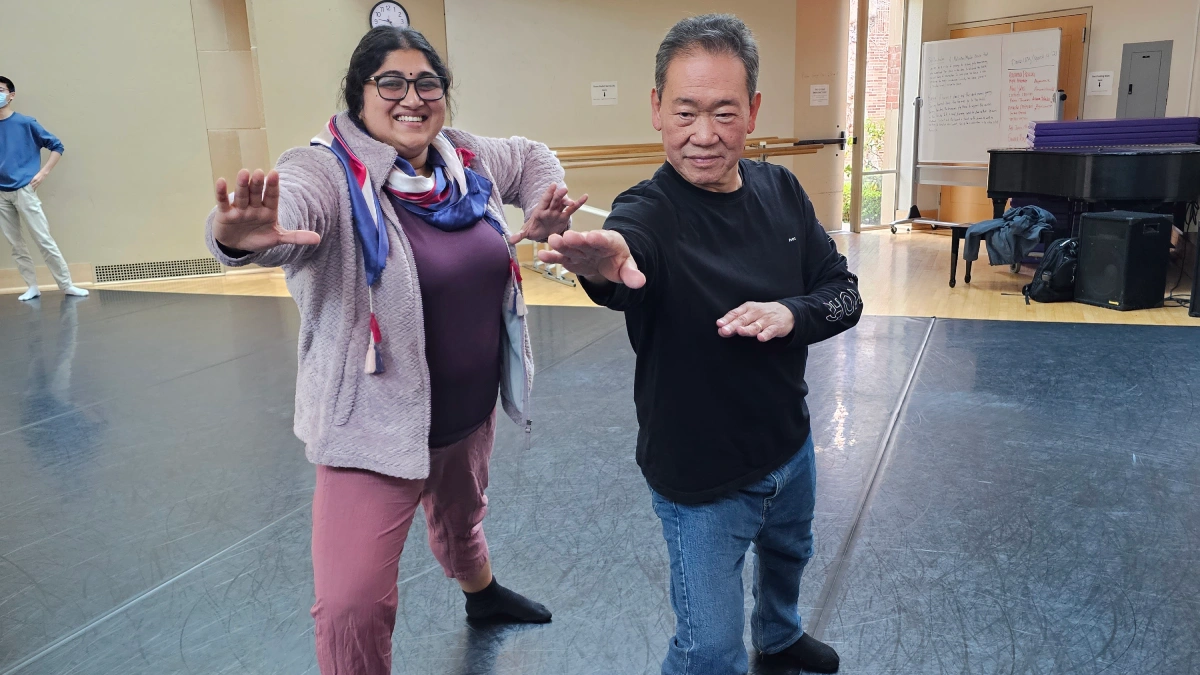
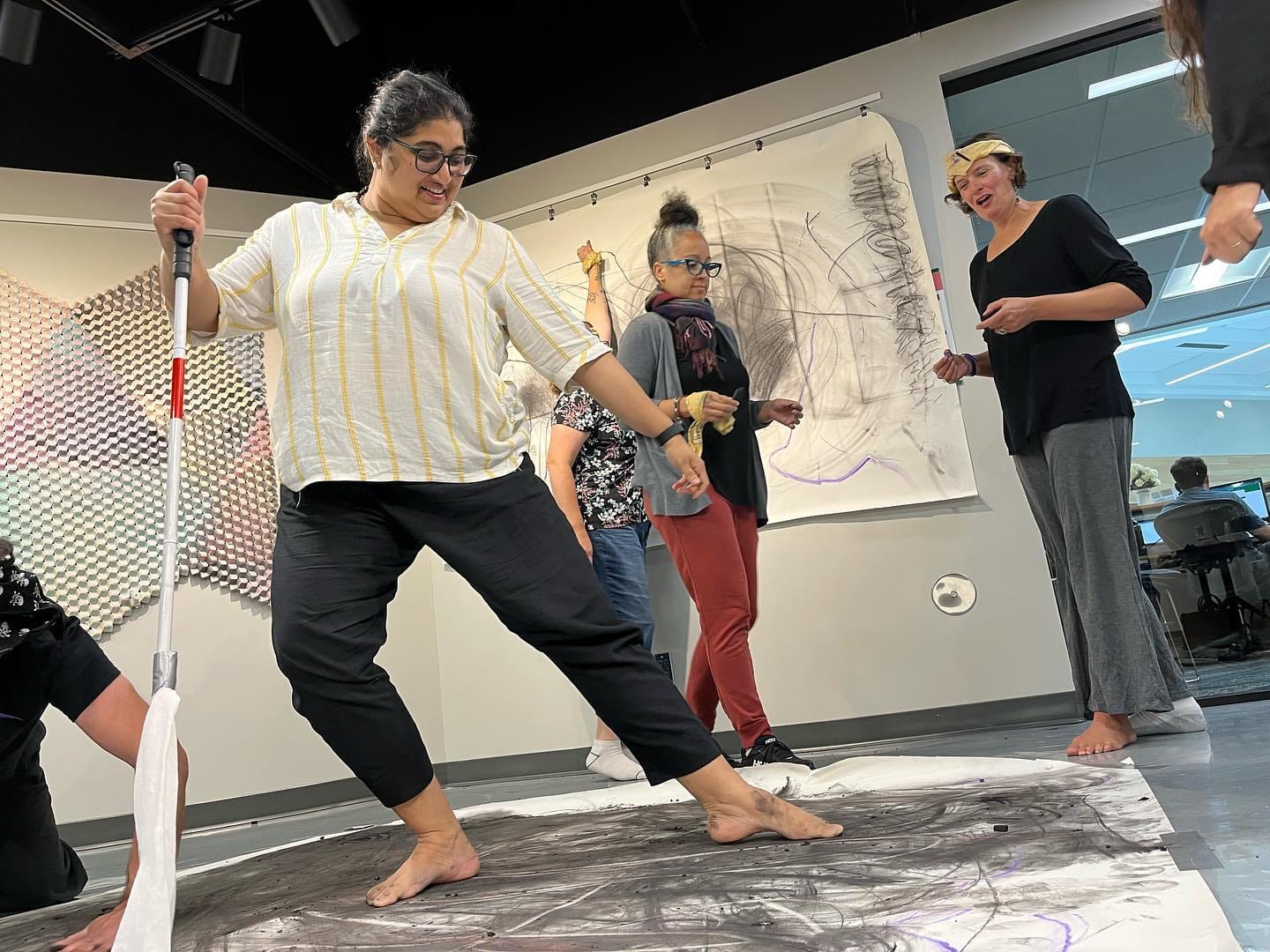
My teaching practice grows directly from my movement research. I conduct accessible dance workshops and Contact Improvisation sessions shaped by disability-led pedagogy, and informed by practices like Tai Chi and Baguazhang. These workshops centre grounding, circularity, responsive weight, and sensory-based orientation. They are built for mixed bodyminds — blind and low-vision movers, chronically pained dancers, neurodivergent participants, mobility-diverse performers, and sighted allies — where movement is negotiated rather than imposed.
Alongside this, I design curricula for accessible arts education. My modules work with sensory-based movement, creative audio description, tactile imagination, and adaptive improvisation. The aim is to offer pedagogies that allow students with varied sensory realities to participate fully and shape the learning environment through their own ways of knowing.
I also work as an access consultant and strategist, helping institutions, studios, and arts organisations think through accessibility as an aesthetic, pedagogic, and infrastructural practice — not an afterthought. This includes rethinking space design, sensory mapping, and modes of communication.
At IIT, I curated En-Visioning Blind Ethos: Exploring Accessibility and Inclusion in Art, a workshop exploring blindness, orientation, tactile imagination, and creative audio description. In other teaching spaces, I integrate martial-arts grounding and somatic cues into lessons on balance, proprioception, and relational movement.
Across all these contexts, the goal is consistent: to create environments where bodies — in their variation and fluctuation — can move, learn, and imagine without being forced into sameness.
AccessIndia Collective
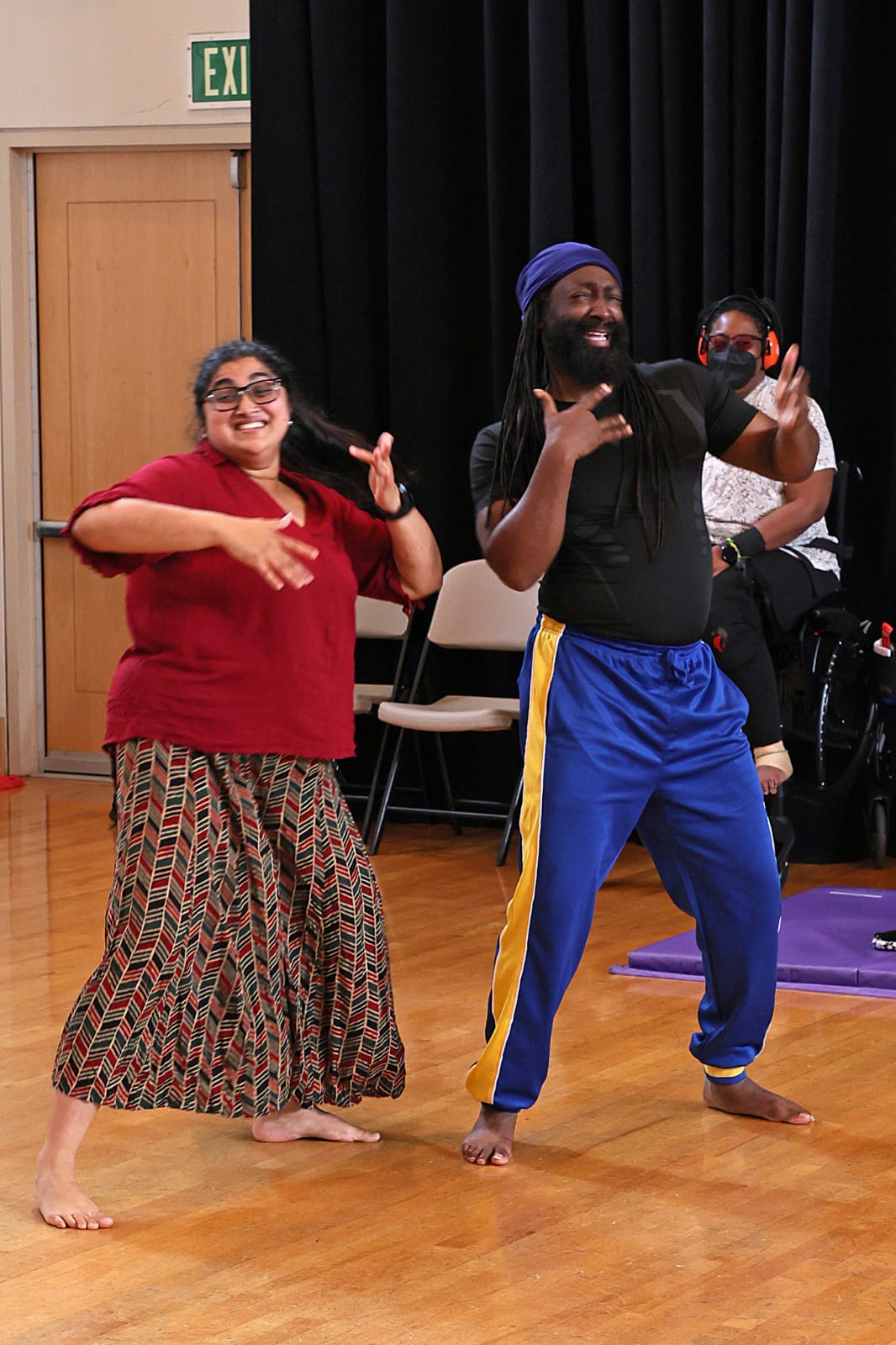
I founded AccessIndia Collective as an infrastructure for my research and movement practice — not an identity-based platform, but a space to explore blind and low-vision movement, sensory-based choreography, creative audio description, and disability-led pedagogies outside institutional limits.
The collective also trains access-supporters: artists, students, educators, and facilitators who want to learn how to work with blind and low-vision movers, provide creative audio description, support tactile orientation, and participate in accessible rehearsal processes. Rather than creating a service model, the focus is on building relational, collaborative access — a shared responsibility rather than a role that sits outside the art.
The collective further works with organisations and institutions by offering accessibility strategies for classrooms, studios, and cultural spaces. This includes consulting on movement-based access, spatial design, sensory mapping, and approaches to blind-led participation.
At its core, AccessIndia exists to support the artistic, pedagogic, and research questions that shape my work:
- How do blind bodies map space?
- How can access function as an aesthetic tool?
- What new forms of choreography emerge when vision is not assumed as default?
- And how can we reimagine education so that difference becomes the starting point, not the exception?
Philosophy
At the core of my work is a simple belief: movement is where the body thinks — where memory settles, where cultural histories surface, where sensory life becomes knowledge.
Every class or rehearsal becomes a conversation with the body — its hesitations, resistances, desires, and capacities. I don’t treat the body as something to fix or perfect; I approach it as a collaborator. Listening is the starting point. Learning grows from how bodies meet gravity, meet each other, meet their own limits, and invent new pathways through those encounters.